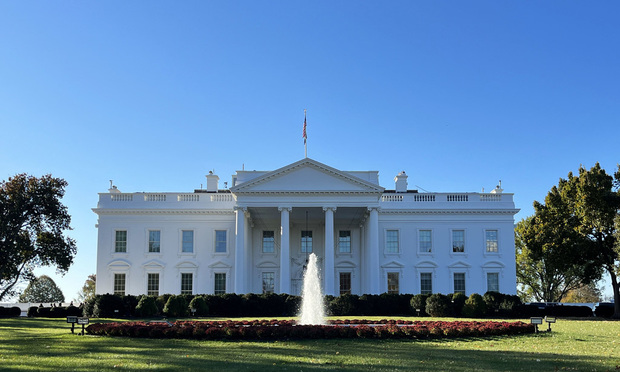
 The White House. Photo: Diego M. Radzinschi/ALM
Credit unions raised concerns over the Trump Administration's FY2027 budget proposal, warning that a significant cut to the Community Development Financial Institutions (CDFI) Fund could undermine access to financial services in underserved communities.
The proposal included a $204.5 million reduction in discretionary funding for the CDFI Fund, a move America's Credit Unions said comes at a critical time for communities that rely on mission-driven lenders. The group has long advocated for full funding, noting that credit unions generate roughly $12 in private capital for every federal dollar invested through the program.
"Proposals to reduce funding for the CDFI Fund are concerning at a time when communities across the country are relying on access to safe, affordable financial services," Scott Simpson, president/CEO of America's Credit Unions, said. He emphasized that credit unions often serve as the only financial institutions in certain areas, with nearly 900 branches operating in census tracts lacking other options.
A statement from Cathie Mahon, president/CEO of Inclusiv, struck a similar tone. She said, "At a time when Americans are hoping their government will deliver on affordability and economic opportunity a proposal to cut funding for the CDFI Fund is deeply concerning. More than 70% of CDFI credit unions serve rural communities, and they are effective stewards of federal funding, leveraging CDFI grants at least 8:1 with private capital. Investing in CDFIs is investing in economic opportunity for all Americans."
Chief Advocacy Officer Jason Stverak at the Defense Credit Union Council (DCUC) not only echoed Simpson's and Mahon's concerns, but added that the CDFI Fund is a "proven" program that provides "economic opportunity where it is needed most."
"We have already seen the consequences of proposed cuts," Stverak said. "The administration's budget previously sought to dramatically reduce — or even eliminate — CDFI funding, a move Congress ultimately rejected on a bipartisan basis by maintaining full funding at approximately $324 million for FY2026. That bipartisan outcome reflects a clear reality: Policymakers on both sides of the aisle understand the critical role CDFIs play in strengthening local economies and supporting working families."
Stverak continued, "For defense credit unions, this issue is especially personal. Many of our member institutions rely on CDFI resources to serve junior enlisted personnel, veterans transitioning to civilian life and military families who often face unique financial challenges. Eliminating this funding would directly undercut financial readiness efforts that are essential to mission readiness and national security. Let's be clear: Cutting the CDFI Fund is not fiscal discipline — it is a direct hit to the very communities policymakers claim they want to support."
While the CDFI Fund proposed cut is the most direct threat to credit unions, CU Times found there are at least six additional areas in the budget that could create downstream challenges:
1. Broad Non-Defense Spending Cuts: The proposal called for a 10% reduction in non-defense discretionary spending, which could slow economic activity in local communities and increase credit risk for borrowers.
2. Cuts to Rural and Community Development Programs: Reductions to USDA rural programs and community facility funding may limit investment in infrastructure and small communities, which are key markets for many credit unions.
3. Economic Development Program Eliminations: The budget targeted programs like the Economic Development Administration for cuts, potentially reducing support for small businesses and regional growth initiatives.
4. Changes to Education and Workforce Funding: A reduced federal role in education and workforce programs could place more financial pressure on borrowers, impacting loan performance and demand for credit products.
5. Reduction in Assistance Programs for Low-Income Households: Proposed eliminations, such as energy assistance programs, may increase financial strain on vulnerable members, particularly during periods of economic stress.
6. Small Business Support Shifts: Cuts and restructuring in federal small business programs could create gaps in access to capital, increasing reliance on credit unions for member business lending.
The FY2027 budget serves as a starting point for congressional appropriations negotiations, where lawmakers will ultimately decide funding levels.
© Arc, All Rights Reserved. Request academic re-use from www.copyright.com. All other uses, submit a request to TMSalesOperations@arc-network.com. For more information visit Asset & Logo Licensing.