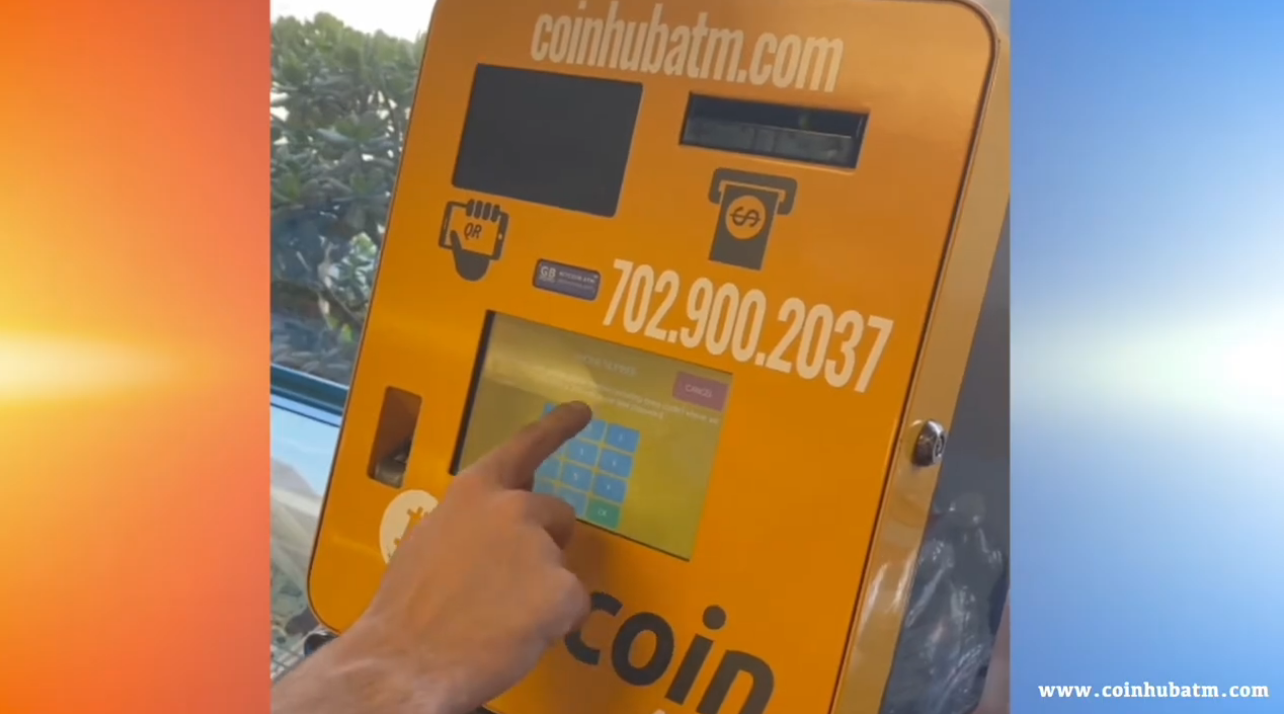
 A screenshot of a Coinbub video to instruct people how to use its kiosks.
California has cracked down on a fourth cash-for-crypto kiosk operator this year, leveling a $675,000 fine against the Las Vegas company that operates as Coinhub.
California’s Department of Financial Protection and Innovation (DFPI) announced Thursday that it ordered the fine as punishment and to refund California consumers it said were overcharged by LSGT Services, LLC, which operates as Coinhub.
California’s DFPI has become more significant with the retreat of the U.S. Consumer Financial Protection Bureau (CFPB) under the Trump administration.
California is the nation’s largest state, accounting for about 12% of the nation’s population and 7% of credit union branch and other office locations.
DFPI said California gave the agency expanded authority under the 2023 Digital Financial Assets Law (DFAL) and the 2020 California Consumer Financial Protection Law (CCFPL), which it called “among the strongest laws of their kind in the nation.”
The consent order against Coinhub was the fourth against a crypto kiosk operator since June over alleged DEAL violations.
“Crypto kiosk operators in California are on notice that we intend to root out bad actors and scammers who put consumers’ hard-earned money at risk,” DFPI Commissioner KC Mohseni said. “We welcome legitimate operators in this industry, however, DFPI will not tolerate those who flout the law and fail to implement required safeguards for customers.”
DFPI said many companies legally operate crypto kiosks in California, typically located in grocery and convenience stores, where people can insert cash directly into a kiosk machine to buy and sell digital financial assets such as Bitcoin. The transactions are often instant and non-refundable. However, a recent DFPI investigation found that since January 2024, Coinhub has committed violations that included:
- Charging California consumers fees and markups well above the statutory maximums;
- Accepting cash transactions exceeding the legal daily limit of $1,000; and
- Failing to provide legally required disclosures before transactions and omitting key information on receipts, including customer names and exchange sources.
DFPI said many of the customers using the Coinhub kiosks were over 60 years old.
DFPI’s order requires Coinhub to pay $675,000 in penalties, which includes $105,000 in restitution to California consumers.
Since June, DFPI has issued desist-and-refrain orders against Coin Time LLC of Wyoming and Anh Management, LLC (doing business as Hermes Bitcoin) of southern California.
DFPI said the companies violated DEAL and federal anti-money laundering requirements by conducting thousands of transactions without collecting sufficient identifying information. The orders required the companies to comply with the law and pay administrative fines and restitution to customers who were charged excessive fees.
Additionally, on June 25 DFPI fined Coinme, a crypto kiosk operator, $300,000 for violations of DFAL, including $51,700 in restitution to California residents, and Coinme agreed to implement measures to prevent future violations.
The U.S. Department of the Treasury’s Financial Crimes Enforcement Network (FinCEN) issued a notice Aug. 4 urging operators of kiosks to be “vigilant in identifying and reporting suspicious activity.”
“The speed and difficulty of reversing [crypto] transactions makes [crypto] an attractive payment mechanism for scammers,” FinCEN said. In particular, it said kiosks can be a convenient way for scammers to exploit unsuspecting victims who can quickly convert cash to digital financial assets.
“Criminals targeting older individuals are particularly likely to direct victims to use [crypto] kiosks to send payments,” it said.
Contact Jim DuPlessis at JDuPlessis@cutimes.com.
© Arc, All Rights Reserved. Request academic re-use from www.copyright.com. All other uses, submit a request to TMSalesOperations@arc-network.com. For more information visit Asset & Logo Licensing.